Long Beach properties face dual-vector pressure due to high maritime humidity from San Pedro Bay and aging wood construction. Western drywood termites target exposed rafters, fascia boards, and decorative beams common…
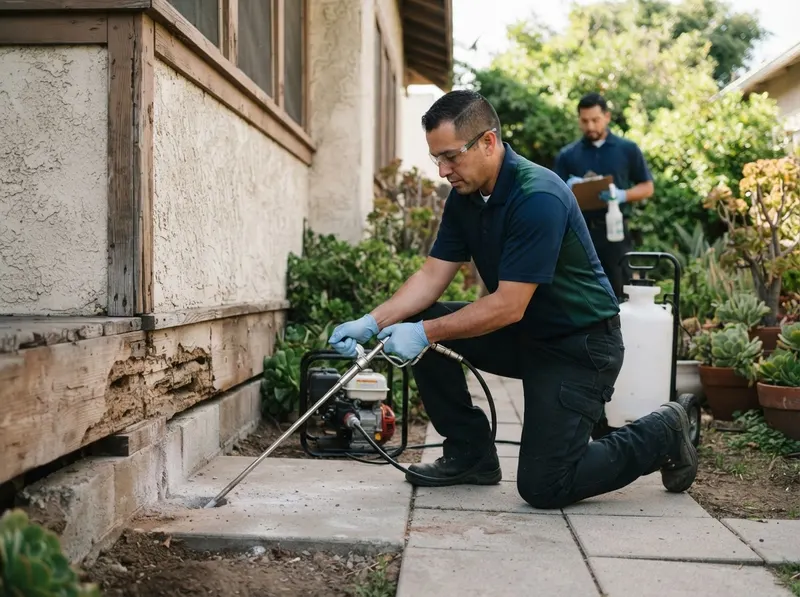
Long Beach properties face dual-vector pressure due to high maritime humidity from San Pedro Bay and aging wood construction. Western drywood termites target exposed rafters, fascia boards, and decorative beams common in 1920s Craftsman bungalows across California Heights, Rose Park, and Bluff Heights. These colonies feed entirely within structural framing without ground contact, expelling hexagonal fecal pellets through tiny kick-out holes. In contrast, Western subterranean termites exploit the elevated water tables and damp soil around Naples canal foundations, Belmont Shore slabs, and Wrigley crawl spaces. Subterranean workers construct moisture-retaining mud tubes across stem walls to reach subflooring, consuming soft springwood along the grain.
Selecting the correct remediation method depends strictly on colony distribution and property construction. Localized precision treatments utilize non-repellent liquid termiticides or direct borate foam injections drilled directly into active galleries. If structural infestations remain isolated to an exterior rafter or garage framing, localized spot treatment eliminates the colony without moving residents out of the home. If termite galleries extend into concealed attic trusses or across inaccessible multi-story framing, typical in two-story properties near Los Altos or El Dorado Park Estates, whole-structure tenting and gas fumigation become necessary. Whole-home fumigation reaches every structural void simultaneously, though it requires a 72-hour vacancy and food removal protocol.
Effective structural defense requires distinguishing termite activity from moisture rot and wood-boring beetle emergence. Drywood swarms emerge during late summer heat spikes, whereas subterranean termites typically swarm during early spring mornings following coastal rainfall. A preventative borate barrier applied to bare wood creates lifelong residual defense against drywood re-entry, while perimeter liquid termiticide barriers halt subterranean soil transit. Structural treatments start at the $250 inspection and spot-treatment minimum, with comprehensive multi-year barrier warranties established following physical verification by a California-licensed field representative.
Every job gets a firm, written price after a free on-site visit.
Tell us about your termite control job in Long Beach and we'll send a clear, written quote, usually the same day.
 Shoreline Oak Pest Control