Coastal marine layers and persistent afternoon humidity across coastal Los Angeles County create optimal nesting conditions under wood rafters, stucco eaves, and sub-deck framing. Properties in Belmont Shore, Naples,…
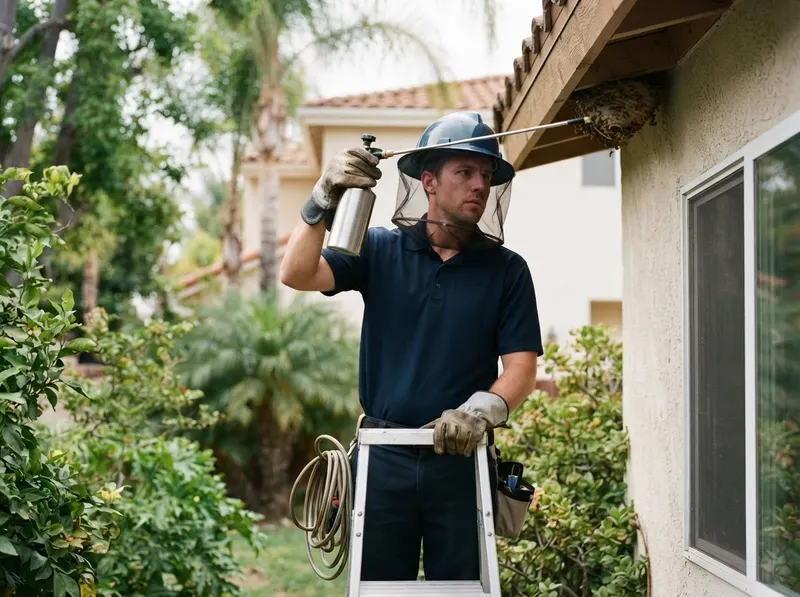
Coastal marine layers and persistent afternoon humidity across coastal Los Angeles County create optimal nesting conditions under wood rafters, stucco eaves, and sub-deck framing. Properties in Belmont Shore, Naples, and Bluff Heights frequently experience paper wasp construction under second-story fascia boards, where salt air accelerates paint chipping and exposes bare nesting substrate. Further inland, the mature tree canopies and irrigation systems in Bixby Knolls, California Heights, and El Dorado Park Estates foster subterranean yellowjacket colonies inside abandoned rodent burrows and dense groundcover. A stinging insect colony near an entryway is an active hazard; store-bought aerosol sprays rarely penetrate deep structural nests and frequently scatter defensive foragers directly into living spaces.
Protective intervention relies on technical precision rather than broad chemical saturations. When treating Spanish tile roofs in Rose Park or vented crawl spaces in Wrigley, technicians identify the precise structural entrance before applying calibrated, fast-acting botanical or synthetic pyrethroid dusts directly into the flight void. This stops aggressive recruitment instantly. Once internal activity drops to zero, the physical comb structure is cut away and vacuum-extracted to remove pheromone attractants and prevent secondary infestations by carpet beetles or coastal moisture roaches. Every treatment is completed with focused barrier applications to seal vulnerable 1/4-inch eave joints and gable louvers.
Decision guidance depends entirely on nest location and structural exposure. If the nest is an exposed paper comb beneath a patio rafter, localized aerosol knockdown and physical detachment resolve the issue in a single 45-minute visit. If wasps or yellowjackets are entering through weep holes, brick crevices, or siding laps along a two-story Los Altos home, the trade-off shifts from rapid surface detachment to specialized micro-dust void injection followed by mechanical mesh exclusion. A surface spray applied to an exterior weep hole traps thousands of insects inside, forcing them through interior baseboards, recessed lighting, and wall outlets into bedrooms. Professional void treatment neutralizes the core brood without forcing stinging pests into the living envelope, preserving indoor air quality and keeping children and pets secure.
Every job gets a firm, written price after a free on-site visit.
Tell us about your stinging insect removal job in Long Beach and we'll send a clear, written quote, usually the same day.
 Shoreline Oak Pest Control